East West Economy Threats

beijingThe west’s economy may be facing a threat from the east. Specifically, this is the impact the US economy is having on China, which is directly affecting Beijing. According to Scott Rickard, America has begun to realize that economically, China is “defeating” the west. Because of this, the US has started pressuring Beijing vis-à-vis disputed territories. Beijing is viewed as a threat by the West since China is one of the region’s that is economically thriving much more than what has been “allowed” to them, by the West.

The potential issue of east west tension is the fact that China’s economy is in such a good place. That would be okay, but for the fact that the west sees this as such a threat to their own troubled economy. And the timing is pretty lousy for the west too. Just recently, Chuck Hagel, US Secretary of Defense issued a warning about how China is actually “destabilizing the South China Sea region,” as it keeps maintaining that it has total rights to the region. But other countries feel the same; hence the dispute. In terms of western reactions to this, the US maintains that it will remain neutral vis-à-vis claims to the area. Still, despite this, America does believe that Japan has administration of the islands.

But this is not the sole issue that is resulting in east west economic tensions. China’s Central Bank recently decided to put an end to the acquisition of foreign exchange reserves in dollars. This decision has “infuriated” America.

Added to this are the military tensions between east and west, developed by Beijing’s ADIZ (Air Defense Identification Zone)’s enforcement. According to Finian Cunningham:

“The escalation of military tensions between Washington and Beijing in the East China Sea is superficially over China’s unilateral declaration of an air defense zone. But the real reason for Washington’s ire is the recent Chinese announcement that it is planning to reduce its holdings of the US dollar.”

Further, from the US perspective, the fact that its economy is being threatened is “a tacit act of war,” which is why it is having such an aggressive reaction to China’s newly declared air corridor.

It thus seems that China – while it is currently thriving fiscally – needs to not act in a bubble. America is still a superpower and the east would do well to remember that.

East West Economic Corridor: Cross-Border Transport

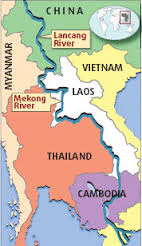
cross-border-transportOne way to enhance the east west economic corridor is by advancing on a cross-border transport agreement. In this vein, Thailand is the region decelerating the process that will ultimate bridge economies between it and Vietnam, Laos, and Myanmar.

According to a recent Asian Development Bank, Japan International Cooperation Agency, Japan External Trade Organization, Overseas Human Resources and Industry Development Association and National Economic and Social Development Board (NESDB) survey, it is hoped that Thai investors will put their money into Laos and Vietnam, further advancing the economic corridor.

The corridor was established by the Ministerial Conference of the Greater Mekong Subregion in the late 90s to encourage development and integration of the four regions. It started functioning at the end of 2006 based on a 1,450-kilometre road, spanning the regions.

It is important the zones receive substantial investments (especially from Thais) and will be mutually beneficial. According to Arkhom Termpittayapaisith, NESDB secretary-general, investing in these regions provides Thais with “attractive investment incentives, tax privileges and one-stop services.” Conceived as a plan to be financially beneficial for all four regions, the east west economic corridor will become most successful if Thais – in particular – make investments in industries from services to trading, education and public health.

East West Economy: From LA to Korea

Hyepin-ImAnalysts are encouraging US investors to purchase stocks from Asian-American banks in the region. Two of banks in LA right now are at the top of the experts’ list. Indeed, BBCN Bancorp was rated at 87 percent and SNL Financial indicated that it would perform better than other banks throughout America. That put it in first place, only beaten by the parent of South Carolina Bank & Trust that got 100 percent “buys.”

In general, according to Peyton Green, a Sterne Agee analyst, investors are seeking out “a strong organic growth profile, the ability to serve as an opportunistic consolidator or … exposure to faster growing niche business.”

This is great news for east west economy and even more positive for banks throughout the world. It’s a nice move away from the Great Recession and real estate collapse. However, some clients are still disturbed by these factors and are staying away from banks, especially SME Korean American owners. Indeed, according to CEO of the Korean Churches for Community Development, Hyepin Im, “some individuals and businesses are coming out of it, but plenty are still struggling. Still, foreign investment is helping the economy to recover. If you’re hitting the bottom, the only way to go is up.”

Whether east or west in origin, investors don’t care. They are looking for banks that “stand out from the crowd,” in the current environment of escalating stock prices. They want banks that can act fast, growing their operations speedily or have the capacity to acquire other banks when the industry consolidates. Currently in LA, it seems that it’s the Korean ones that are succeeding in this.

China UK Trade Centers

RenminbiIn the very near future, it is anticipated that a London-based clearing bank will be set up as a “hub for offshore renminbi RMB) payments,” positively impacting trade in China.  UK Chancellor of the Exchequer, George Osborne is currently working on an agreement that would result in the UK becoming one of the most significant offshore centers in the world for Chinese currency trading.

Recently, there has been a significant escalation in the amount of global RMB transactions.  This is because China has broadened its economy, removing itself somewhat from its insular comfort zone. This Osborne believes, is indicative of “a vital growth opportunity,” for the UK.

During Osborne’s recent visit to Hong Kong, he spoke about China UK relations. He termed it a “two-way relationship of equals.”  He further explained, that it is no longer the case that UK’s finance minister was focused merely on ensuring enhanced accessibility to China’s market.   Indeed, today, close to two-thirds of RMB payments that are out of China and Hong Kong, are taking place in London.

These recent moves are paving the way for an already elevated level of positive, workable, China UK economic relations.

Expanding Asia America Trade Agreements

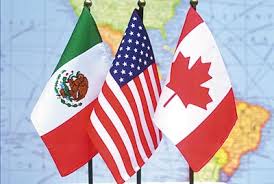
NAFTABarack Obama has pledged to expand Asia America trade agreements.  Even though he is dealing with some quite heavy duty issues within his own political party, on speaking with Canadian and Mexican policymakers he stressed the importance of the US maintaining its “competitive advantage”. The countries are currently working on a Trans-Pacific Partnership (TPP) which is an agreement between 12 nations that would probably be one of the largest trade deals in the world.

The Three Amigos – the term given to the talks transpiring between the three nations – have each had their fair change of changes in their economies since the previous major trade agreement occurred around 20 years ago – the NAFTA.

It is hoped that these negotiations will result in North America Asia trade relations 20 year bloc being “revitalized.”  Still there are some issues that remain to be taken care of, such as Canada’s refusal to end visa requirements for Mexican visitors as well as the somewhat controversial Keystone XL pipeline project that would bring oil from Canada to Texas but could have a negative environmental impact.  Still if the TPP does go ahead, it could result in US leaders agreeing on labor and environmental standards that were lacking in the NAFTA agreement.

The TPP agreement involves all the NAFTA nations as well as Australia, Brunei, Chile, Japan, Malaysia, New Zealand, Peru, Singapore and Vietnam.  This figure comprises 40 percent of the global economy.

Japan Euro Economic Recovery

Policy-makers in Japan have substantially enhanced the Tokyo Stock market, fueling the economic recovery.  The question now being asked is, could this pattern be experienced in Europe in the near future?

Japan’s Central Bank is now printing a ton of new money which has devalued the yen and “turned the tide in the war against falling prices.” The problem with this is though that in practice what it will do is push people to put off spending and opt instead to save.  That will not be good for the economy.

Irrespective of this, Europe is being encouraged to follow Japan’s lead.  It has been argued that the only thing that will save the Eurozone now is additional printed Euros.  That will guard against deflation and revive the problematic-countries’ economies.

The question on the Japan Euro potential connection now is to review the Japan situation and then to apply it to Europe.  The primary goal should be “ending deflation” according to JP Morgan Asset Management analysts.

East West Merger Through Business And Entertainment

Adam-Roseman Adam Roseman’s firm – Fanstang (meaning a place for fans) – is enabling worldwide celebrities to connect with their fans living in China.

Given that Roseman has a familial background in Hollywood, he was able to establish the US-Chinese marketing firm together with a friend living in Hollywood and another in Shanghai. Social networking and video sites get content from Fanstang on Hollywood stars, giving access to fans in China to updates on the stars. Today it even boasts a Hollywood news slot on Dragon TV, Shanghai’s key provincial satellite TV network.  The show gives viewers the most current US entertainment news, celebrity interviews and lifestyle content.

Roseman is working with various key players in both China and the US, including GM of Shanghai New Entertainment Media, Li Yong.  He sets up meetings between US stars and Chinese fans. One of these took place a few months ago, featuring Miami Heat stars LeBron James and Dwyane Wade.  During 2013, almost 10 fan meetings took place with Fanstang and Sohu (Chinese web company) along with other such events with Youku and Human TV.  As well, it has brokered and arranged over $20m of endorsement deals for western celebrities and eastern athletes since 2012. The deals are large, ranging from $100,000 for an endorsement for a month to millions of dollars for deals over multiple years.  This has been a true case of east-west business successful merging, with both the US and China equally benefiting.

With Adam Roseman’s initiative, Western stars have been able to increase their presence in China as they can now speak to their fans every single day.  This makes them more real, and Fanstang has successfully created authentic US-Chinese star-fan relationships.  Currently, the platform’s client list spans NBA, film, TV talent and more.

As Adam Roseman has explained, this is just the beginning.

Asia America: Addressing Three Key Aspects

MarcielPrincipal Deputy Assistant Secretary, Bureau of East Asian and Pacific Affairs, Scot Marciel recently gave a statement to the Senate Committee on Foreign Relations Subcommittee on East Asian and Pacific Affairs to “testify on the Economic Aspects of the U.S. Rebalance to the Asia-Pacific.”  Three of the topics addressed on Asia America relations included: security, politics and economics.  This article views Marciel’s position on these topics.

Security

“Recognizing that America’s future prosperity and security are very much intertwined with the prosperity and security of the East Asia-Pacific region, President Obama made a strategic commitment when he came into office to rebalance our interests and investments to this region. The President set out a clear, overarching objective for the United States in the region to sustain a stable security environment and advance a regional order rooted in economic openness, peaceful resolution of disputes, and respect for universal rights and freedoms.”

Politics

“The Administration remains committed to this objective and is building an increasingly active and enduring presence in the East Asia-Pacific region, including through our economic engagement. President Obama has hosted seven Asian leaders in 2013 alone, including six visits to the Oval Office; Vice President Biden traveled to Japan, China and Korea in early December; and in addition to Secretary Kerry’s four trips to the region since assuming office, other cabinet members including Secretary Lew, USTR Froman, Secretary Pritzker, Secretary Hagel, Secretary Jewell, Secretary Sebelius, Secretary Moniz, and EPA Administrator McCarthy have all traveled to Asia in 2013.”

Economics

“We have made significant progress on the rebalance in a number of areas—modernizing our alliances, deepening our engagement with emerging powers such as China, strengthening regional institutions, and promoting democracy and human rights. But, during his first major speech on the rebalance to the Australian Parliament in 2011, President Obama framed the rebalance by emphasizing that the Asia-Pacific is critical to achieving his highest priority — creating jobs and opportunity for the American people. For this reason, the economic pillar of the rebalance is paramount and will have widespread and significant positive impacts at home and in the region for many years to come.”

In addition, Marciel believes it is important for the US to “tap into the economic dynamism of the East Asia-Pacific.” There has already been substantial progress such as a growth of 22 percent in US trade with the East Asia-Pacific region between 2008-12.

However, still more work needs to be done.  Chairman of a Senate Panel that Oversees American Foreign Policy to Asia, Sen. Ben Cardin, D-Md. Argued that there has been insufficient dialogue between lawmakers on the Trans-Pacific Partnership (TPP). The US administration does however see the TPP as integral to boosting American exports in Asia’s developing markets.  The Asia nations did not end the deal by the end of the year.  It is hoped that these negotiations will resume early next year.

There is always room for improvement.  While America Asia ties are strengthening, it’s a work in progress. Once that happens, trade and exports will run much more smoothly, opening up more employment opportunities in each region.

China UK Political Relations

David-CameronEven though it took place more than a year ago, the repercussions of the meeting between the Dalai Lama and David Cameron are still being felt.  In 2012, the UK Prime Minister met with the Tibetan spiritual leader.  In the last few years there has been progress with China UK relations, resulting in a deepened mutually beneficial cooperation.

During the meeting between David Cameron, Nick Clegg and the Dalai Lama, the bilateral ties between China UK were “strained.”  Thereafter, the government of China called for a public apology and on the UK to “take concrete actions” to repair the two countries’ strained relationships.

Hugo Swire, British Foreign & Commonwealth Office (FCO) State Minister does not believe the UK has anything to apologize for vis-à-vis the PM’s meeting with the Dalai Lama.   But clearly China does not feel the same.  Indeed, so disappointed has the eastern superpower been at the UK’s behavior that a few months ago it forced Cameron to cancel his trip to China.  It is now hoped that next month this trip will be rescheduled in an effort to promote China UK relations vis-à-vis Chinese investment in the UK’s infrastructure projects.

But these UK-China issues are not solely about what happened in 2012.  According to Britain’s Chancellor of the Exchequer George Osborne, “there is a bit of a British attitude which treats China as a sort of sweat shop on the Pearl river. One of the things I am trying to do this week in China is to change British attitudes to China. This is a country that is right at the forefront of medicine and hi-tech and computing and hi-tech engineering.”  With this in mind he is thus taking a  five-strong ministerial delegation to China in an effort to make way for an official visit by Cameron who’s not been there for three years.


East West economic corridor

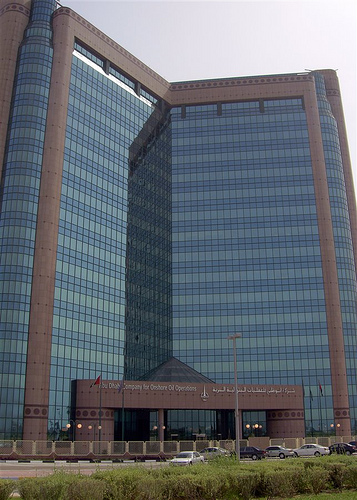
abu-dhabiAs the new CEO of the National Bank of Abu Dhabi (NBAD),  Alex Thursby is seeking to develop the bank’s focus by the fast-emerging East West economic corridor. Thursby comes to the bank with expertise in Asia-Pacific banking.  In order to do this, he will be working closely on eight banking centers within the economic bloc throughout the east and west.  As well he plans to set up five international bank franchises in the fastest-economic-growing countries.  He will be developing a strategic change at the bank to actualize this.

In order to make the most of opportunities in the East-West corridor, Thursby said that he wants Abu Dhabi’s National Bank to “remain and develop further to be the best bank in the UAE.”  He also believes that over the next two decades, the East West economic corridor “will see the greatest emergence of the middle class.  By 2025, all but two of the new mega-cities of the world will come from this corridor.”  In addition, Thursby believes that the “sheer size” of Indonesia, Malaysia and Egypt will lead them to be “the future growth engines of the world.”  In addition, given Abu Dhabi’s geographic location in the center of the east west economic corridor, it will be in a better position to achieve this.

As well as boasting a top geographic location, Abu Dhabi is very stable. This renders it more attractive for Asian investors looking to find a region in the UAE in which to invest.  Indeed, the UAE has become increasingly popular over the last year-and-a-half as investors move potential business from the tumultuous Middle East over there.  In 2012 the economy advanced to 4.4 percent.  Further, Abu Dhabi has put billions of dollars into various industries in an effort to bring about jobs and reduce reliance on oil.  Indeed, in 2012 Abu Dhabi’s non-oil industries increased 7.7 percent.