 Traditionally, its been the Japanese that have commanded manufacturing of the automobile industry. the world’s 3rd largest automobile manufacturer and exporter, and has 6 of the world’s 10 largest automobile manufacturers. It is where many of the most famous car brands are from including: Acura, Daihatsu, Datsun, Hino, Honda, Infiniti, Isuzu, Lexus, Mazda, Mitsubishi, Nissan, Subaru and Suzuki.
Indeed by 1985, Japanese automakers had been established as the top in this field with innovations being made in manufacturing systems, management systems, and automotive materials. They were also top environmentally-speaking at this time with 75 percent of Japanese cars being recyclable. Around a decade later Japan was well into the luxury car market boasting top high end brands like Acura and Lexus.
The Japan automobile industry boasts a lot of firsts also. It was the first to introduce robotics manufacturing in car production, as well as Hybrid and Electric car technologies.
But what’s happening now? According to a recent article in Bloomberg by Anjani Trivedi, Japan’s automakers might soon be pushed out of the US, which would potentially re-direct them to China. With Donald Trump’s new legislation since US authorities are now “considering making imported cars meet stricter environmental requirements [such] non-tariff barrier would dent manufacturers including Toyota Motor Corp., Nissan Motor Co. and Honda Motor Co., which together command about one-third of the market.”
Furthermore:
“Auto sales in the U.S. increased just 6 percent in March from a year earlier, and Japanese manufacturers struggled to keep pace, with Toyota, Nissan and Honda clocking average growth of 2 percent. Light trucks, rather than sedans, where the Japanese excel, are also becoming more popular, while the cost to companies of shifting a car, including buyers’ incentives and other marketing expenses, is rising.”
The idea behind Trump’s new policies is – according to Timothy Puko – said to be “designed to reduce the relative cost of cars manufactured in the U.S., by American workers…. U.S. auto makers and industry lobbyists have complained they are blocked from foreign markets by nontariff barriers. The U.S. car industry claims foreign auto makers face few of these barriers when shipping to the U.S., with Japan and Korea among the biggest targets of these grievances.”
So time will tell exactly which region will end up in the fast lane…
 So what is happening to the markets and trading in the east once Britain pulled out of the EU? How did it affect trading? Actually that question can also be posed for the western world too. Here we look at the positive impact this move has had on the Irish Republic.
 In 2017, Asia became the largest purchaser of US crude oil, a trend that is likely to continue in 2018 which is significant given that it has just been two years since Washington ended its crude-export ban. According to statistics from the US Census Bureau, the percentage of how much oil Asia took from the US was 37, which was a development of 9 percent in 2016.
 On November 28, bitFlyer – the Tokyo-based bitcoin operator – brought its services to America with a US-based virtual currency exchange platform. Already since the beginning of this year, over $100 billion has been traded in virtual currency and the company accounts for 30% of all bitcoin that is exchanged internationally.
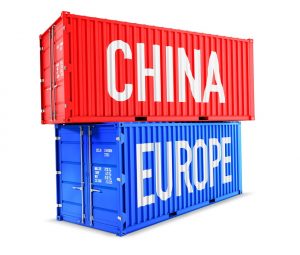 Confederation of British Industry data has shown that in 2016, the UK and China undertook £55 billion of trade rendering Britain China’s 8th largest partner worldwide. And last year it was only Germany that conducted more trade with China. The numbers for British-China trade are incredibly positive especially in the current post-Brexit environment. This also gives Theresa May’s country a better marketing position for other global interactions. Plus, British goods and services are gaining popularity in the region.
 In Bangkok, work is being undertaken to construct a 1,400 kilometer road to connect India with Southeast Asia. It is the first time a connection will have been made on land in tens of years and is likely to significantly bolster trade and cultural transactions between the regions.
 Comprising around 30 percent of international GDP, Japan and Europe are ready to enter into an agreement which would establish “an economic mega-bloc” between the two regions. This not only sends a message to Washington that the two entities are committed to free trade and an open economy, but also that this will have a substantial impact on the international economic environment.
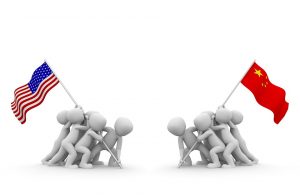 The battle for the top spot in global trading is on. China and the US are currently battling it out especially as East Asia comes up in the running. What this means for the rest of the world however, is possible anticipated fear. The concern is that countries will have to “pick a side,” which will only end negatively.