Automobile Industry: Who’s in the Fast Lane Now?

Traditionally, its been the Japanese that have commanded manufacturing of the automobile industry. the world’s 3rd largest automobile manufacturer and exporter, and has 6 of the world’s 10 largest automobile manufacturers.  It is where many of the most famous car brands are from including: Acura, Daihatsu, Datsun, Hino, Honda, Infiniti, Isuzu, Lexus, Mazda, Mitsubishi, Nissan, Subaru and Suzuki.

Indeed by 1985, Japanese automakers had been established as the top in this field with innovations being made in manufacturing systems, management systems, and automotive materials. They were also top environmentally-speaking at this time with 75 percent of Japanese cars being recyclable. Around a decade later Japan was well into the luxury car market boasting top high end brands like Acura and Lexus.

The Japan automobile industry boasts a lot of firsts also.  It was the first to introduce robotics manufacturing in car production, as well as Hybrid and Electric car technologies.

But what’s happening now?  According to a recent article in Bloomberg by Anjani Trivedi, Japan’s automakers might soon be pushed out of the US, which would potentially re-direct them to China.  With Donald Trump’s new legislation since US authorities are now “considering making imported cars meet stricter environmental requirements [such] non-tariff barrier would dent manufacturers including Toyota Motor Corp., Nissan Motor Co. and Honda Motor Co., which together command about one-third of the market.”

Furthermore:

“Auto sales in the U.S. increased just 6 percent in March from a year earlier, and Japanese manufacturers struggled to keep pace, with Toyota, Nissan and Honda clocking average growth of 2 percent. Light trucks, rather than sedans, where the Japanese excel, are also becoming more popular, while the cost to companies of shifting a car, including buyers’ incentives and other marketing expenses, is rising.”

The idea behind Trump’s new policies is – according to Timothy Puko – said to be “designed to reduce the relative cost of cars manufactured in the U.S., by American workers…. U.S. auto makers and industry lobbyists have complained they are blocked from foreign markets by nontariff barriers. The U.S. car industry claims foreign auto makers face few of these barriers when shipping to the U.S., with Japan and Korea among the biggest targets of these grievances.”

So time will tell exactly which region will end up in the fast lane…

East Markets Post-Brexit

So what is happening to the markets and trading in the east once Britain pulled out of the EU?  How did it affect trading?  Actually that question can also be posed for the western world too.  Here we look at the positive impact this move has had on the Irish Republic.

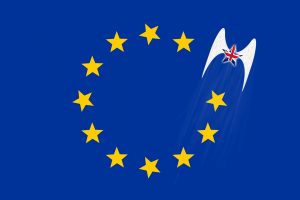
It seems like because of Brexit there will now be some kind of trade border between the UK and the Irish Republic.  Since the UK decided to leave the EU, now it is necessary for there to be customs checks on anything moving between Europe and the UK, both ways.  Since this also includes the Republic of Ireland, the trade border has to be set up.

The negative part of this is that this will involve more bureaucracy and costs.   John O’Loughlin of PwC Ireland explained this further:

 “Understanding the Brexit impact across all parts of the business continues to be a critical action, and with much commentary in recent days regarding the relationship between the UK and EU and the EU’s stance that a transition deal is not a given, we must all continue to watch the clock tick towards March 2019.”

Meanwhile British authorities have voiced “object[ion over] EU proposals for avoiding a hard border on the island of Ireland but haven’t been able to come up with any proposals of their own.”

Still, the loyalty the Republic has shown over the years to Europe should stand them in good stead since:

“By relying on its status as a loyal EU member Ireland has managed hold the British government to its promises in relation to a hard border in a way that would have otherwise been impossible. But it has also meant that the chances of a hard Brexit have been increased.”


Where Asia Meets America: The Launch of BitFlyer US

On November 28, bitFlyer – the Tokyo-based bitcoin operator – brought its services to America with a US-based virtual currency exchange platform.  Already since the beginning of this year, over $100 billion has been traded in virtual currency and the company accounts for 30% of all bitcoin that is exchanged internationally.

As such, bitFlyer it is probably not unrealistic for the future to see US traders connecting to its Japanese exchange.  It has been specifically designed for individuals who are already engaged in trading at least $100,000 in virtual currency monthly; with this, they will be able to trade to place market, limit and more, letting traders connect to its Japanese exchange.

As Bartek Fingwelski, COO of bitFlyer USAexplained: “Our expansion and upcoming cross-border trading addresses a huge unmet need in the US by institutional traders looking to access large amounts of liquidity across multiple virtual currency markets. Through our web interface or API, approved professional traders can be up and running and making trades in a matter of minutes.”

Update: Japan-EU Deal

Comprising around 30 percent of international GDP, Japan and Europe are ready to enter into an agreement which would establish “an economic mega-bloc” between the two regions.  This not only sends a message to Washington that the two entities are committed to free trade and an open economy, but also that this will have a substantial impact on the international economic environment.
Talks for the collaboration have been going on since March 2013. There have definitely been some obstacles slowing it down, but now things are moving much faster, most notably since Trump took office with concerns of the impact of trade protectionism on worldwide trade as well as Japan and Europe’s economies.

Finally last month – on July 7 in Hamburg – a deal was signed at the G20 summit.  And what this means is that 91 percent of EU exports to Japan (and 75 percent of Japanese exports to the EU) became tariff-free vis-à-vis trade volume.  Within the next decade-and-a-half it is anticipated that both shares will reach 99 percent and tariffs for the rest of the products will slowly decrease.

The key points of the deal are the compromise agreements reached on the major food, machinery and other products. Japan’s import tariffs for cheese, currently as high as 29.8 per cent, were effectively the biggest stumbling block at the talks, but finally a solution was found. Japan will import a fixed amount of European soft cheese at a new low tariff rate, reduced to zero in 15 years. Tariffs for hard cheese like cheddar are to be abolished in 15 years without setting quotas.

As Japan’s Prime Minister Shinzo Abe said, this deal will likely result in “the world’s largest free, advanced, industrialized economic zone.”

Advancing US-China Ties

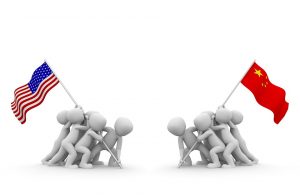
The battle for the top spot in global trading is on. China and the US are currently battling it out especially as East Asia comes up in the running. What this means for the rest of the world however, is possible anticipated fear. The concern is that countries will have to “pick a side,” which will only end negatively.
The good news however, is that since Trump took up the US presidency, the North Korea agreement went into place and discourse advanced resulting in the compliance of a 10-point trade deal. According to Renmin University’s Professor Shi Yinhong it is unlikely that the Sino-US rivalry will decline. So there’s that.

So politically there are issues. But in the arts and education things are really going well for China and the US. And that is good for relations in other industries between the two regions. As U.S.-Asia Institute Trustee and the President of DMG Entertainment Chris Fenton noted: “When people collaborate on making anything artistic, there’s an emotional pull inside of that and if it works well, you not only have a great business, you also have a great diplomatic cohesion between the two countries.”

And if anyone can offer optimism on the subject area, it’s Matt Sheehan, creator of Chinafornia Newsletter. He says that US-China relations (in particular in California) are booming: “California is the living laboratory for a new paradigm in U.S.-China relations. This new paradigm is built on grassroots ties and face-to-face interactions.”

So a lot is developing between the two nations. Let’s see where the next step takes us.

China-UK Ties

In an effort to advance relations between China and the UK, initiatives are being taken to bring Chinese Mathematical teaching methods to England. In this video from CGTN Africa, we learn about the consolidation between Century Publishing (China) and Harper Collins (UK) which is seeking to persuade schools in the UK to change their teaching methods to those used in Shanghai. This would mean British students would use Chinese arithmetic textbooks.

The Kazakhstan-Lianyungang–Vietnam Transport Corridor

The new agreement between Vietnam and the EAEU countries (Eurasian regions) is set to encourage import-exports between the countries.  As an integral part of the  new economic policy (Nurly Zhol), Nursultan Nazarbayev (President of Kazakh) determined that effective transport and logistics chains need to be built between Europe and Asia through Kazakhstan.

As well as supplying cargo to Vietnam, finding out how successful delivering goods from China to Southeast Asia, will be helpful.  As such  Kazakhstan – as well as exporting its own materials – needs to offer goods from EAEC countries to Southeast Asian regions via the Kazakhstan-Lianyungang (PRC) – Vietnam Transport Corridor.

The first consignment had 32 containers filled with 700 MT of Kazakh grain.  It left at the end of January.

This sentiment was echoed last month at a meeting addressed by Beketzhan Zhumakhanov (Kazakh Ambassador) spoke.  He said:

“Today, we have the first meeting in Vietnam and representatives of Kazakhstan, Vietnam and China gathered at a negotiating table to discuss the prospects of transporting goods along the Kazakhstan-Lianyungang Port-Vietnam corridor and further to other countries of Southeast Asia.”

And now they are looking toward additional methods of increasing trade (within the agreement), while testing options via the Kazakhstan-Lianyungang Port-Port of Ho Chi Minh City route.   Zhumakhanov explained:

“A railway route from Kazakhstan to the port of Lianyungang was constructed where we established a joint venture. China is interested in the exploitation of railways for the delivery of goods to Russia and the European countries. China sent its first freight train to London through Kazakhstan in early January. It took 18 days, which is two times less than by the sea route and much cheaper than air transportation.”

To date, around 40 countries are interested in establishing trade and economic relations with the EAEU and right now, the EAEU is working on FTZ agreements with: China, Iran, India, Israel, and Singapore.


UK: Looking Ahead

Rather than just following the trend of what looks good now, it seems that officials in the UK are considering what might make good trading sense for the future.  As such it is turning to some of the poorest regions in the world in an effort to secure trading partners for long-term deals.

One example of this was the recent support the country’s Department for International Development is planning to give to economies in Asia and Sub-Saharan Africa.  Working with the governments there, the plan is to help the advance local businesses there, while escalate job opportunities and develop infrastructure.

For Britain, this will create new trading relationships outside of the European Union, following BREXIT.  As such, Britain’s Prime Minister, Theresa May has been traveling to different places around the world in an effort to attract more trade, with an emphasis being put on establishing new connections with emerging economies.  This is being pushed by the UK’s ‘Economic Development Strategy,’ which seeks to take existing commitments and build on them, while confronting any international issues like population growth, climate change, etc.

In addition, given that outsourcing manufacturing to firms in Asia is pretty much the only option available to small businesses in the UK, developing these relationships now will bode well for the future.  Plus, looking at the banking industry, increased labor costs along with minimal profitability has rendered many staff members to leave existing positions for Southeast Asian locales.  With HSBC this year having moved its offshore jobs to Asia, this trend is likely to continue.

Should the UK Look to Asia Post-Brexit?

Post-Brexit, where to now for the UK?  This question has been on the minds of various economic commentators and executives and some feel the answer strongly lies in south Asia. Given that the UK’s political perception is somewhat dicey, south Asia’s patience could just be the perfect fit.  Continental Europe is not exactly famous for its capacity at coping with any kind of political turmoil.

Furthermore, when you look at Asia, most business is conducted there in English.  British executives do not traditionally pride themselves on their proficiency in foreign languages and in other parts of Europe that is often met with substantial disdain.  Given the fact that in addition to that, 9 percent of foreign-born Brits hail from India, 6 percent from Pakistan and 2 percent from Bangladesh, this Asian origin could – as noted in a recent Financial Times article written by Daiva Repeckaite – result in a “cultural and economic bridge” following Brexit.

There is still a chance though that Europe could be the place of choice for British executives to invest.  Or at least, borderline.  Given that British PM Theresa May just signed a $US125 million ($165.6 million) defense equipment deal with Turkey, this is likely to result in greater trade between the two regions.  Now Turkey is interesting because it was just under three years ago that the country started its process of going into the Europe Union (not that long before Britain started its very own exit) and anyway geographically it is a bit of a fence-sitter between Europe and Asia, resulting in a somewhat confused identity.

Still, with May’s recent deal the UK is hopeful that this will lead to additional trade between the allies, pushing for an aviation security program simultaneously.   May actually referred to the deal as indicative of Britain being a “great, global, trading nation and that we are open for business,” so really this open-ended statement could lead the UK in any direction, east or west.

Asia and the Expansion of UK’s Insurance Markets

insurancePart of the UK’s insurance markets could be expanding into different regions of Asia.  Having identified 8 countries in this eastern region the Association of British Insurers (ABI) will be making its mark overseas.  In particular, China and India were singled out as attractive areas for the Association.  Other areas included: Hong Kong (SAR), Indonesia, Japan, Malaysia, Singapore and South Korea.

ABI chose these countries having assessed them for growth potential, market size and current commercial/regulatory relationships.  According to the firm’s Director General, Huw Evans, there is an opportunity for the entire insurance and long-term savings industry to take a key role in new post-Brexit international trade deals.  This should be done gradually so that secure improvements are more likely.  Ultimately free trade could benefit everyone and this industry, Evans believes, is in a prime position to demonstrate that fact.

Another industry that seems to be thriving in the Asia-Pacific region is prefabricated housing; with two-thirds of it now being in the area.  This is particularly true for China where – it is estimated that between 2014 and 2019 – two-fifths of new international demand will be generated.