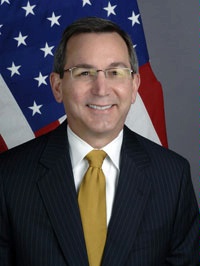
 Principal Deputy Assistant Secretary, Bureau of East Asian and Pacific Affairs, Scot Marciel recently gave a statement to the Senate Committee on Foreign Relations Subcommittee on East Asian and Pacific Affairs to “testify on the Economic Aspects of the U.S. Rebalance to the Asia-Pacific.” Three of the topics addressed on Asia America relations included: security, politics and economics. This article views Marciel’s position on these topics.
Security
“Recognizing that America’s future prosperity and security are very much intertwined with the prosperity and security of the East Asia-Pacific region, President Obama made a strategic commitment when he came into office to rebalance our interests and investments to this region. The President set out a clear, overarching objective for the United States in the region to sustain a stable security environment and advance a regional order rooted in economic openness, peaceful resolution of disputes, and respect for universal rights and freedoms.”
Politics
“The Administration remains committed to this objective and is building an increasingly active and enduring presence in the East Asia-Pacific region, including through our economic engagement. President Obama has hosted seven Asian leaders in 2013 alone, including six visits to the Oval Office; Vice President Biden traveled to Japan, China and Korea in early December; and in addition to Secretary Kerry’s four trips to the region since assuming office, other cabinet members including Secretary Lew, USTR Froman, Secretary Pritzker, Secretary Hagel, Secretary Jewell, Secretary Sebelius, Secretary Moniz, and EPA Administrator McCarthy have all traveled to Asia in 2013.”
Economics
“We have made significant progress on the rebalance in a number of areas—modernizing our alliances, deepening our engagement with emerging powers such as China, strengthening regional institutions, and promoting democracy and human rights. But, during his first major speech on the rebalance to the Australian Parliament in 2011, President Obama framed the rebalance by emphasizing that the Asia-Pacific is critical to achieving his highest priority — creating jobs and opportunity for the American people. For this reason, the economic pillar of the rebalance is paramount and will have widespread and significant positive impacts at home and in the region for many years to come.”
In addition, Marciel believes it is important for the US to “tap into the economic dynamism of the East Asia-Pacific.” There has already been substantial progress such as a growth of 22 percent in US trade with the East Asia-Pacific region between 2008-12.
However, still more work needs to be done. Chairman of a Senate Panel that Oversees American Foreign Policy to Asia, Sen. Ben Cardin, D-Md. Argued that there has been insufficient dialogue between lawmakers on the Trans-Pacific Partnership (TPP). The US administration does however see the TPP as integral to boosting American exports in Asia’s developing markets. The Asia nations did not end the deal by the end of the year. It is hoped that these negotiations will resume early next year.
There is always room for improvement. While America Asia ties are strengthening, it’s a work in progress. Once that happens, trade and exports will run much more smoothly, opening up more employment opportunities in each region.