Eliminating Eastern “Karoshi” Culture?

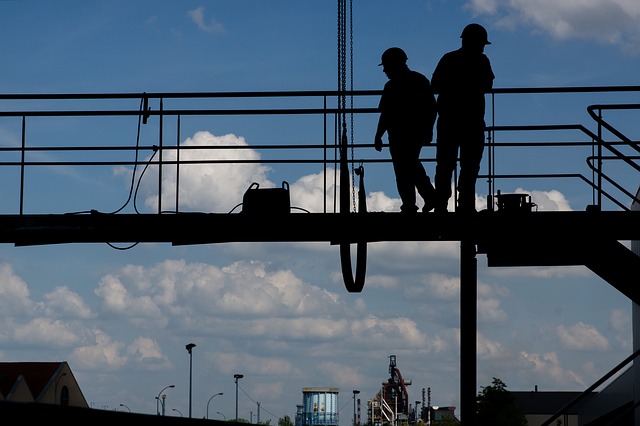
hard-workKaroshi is a term that has been used in Japan for a long time. It literally means “death by overwork,” as the culture of the land is to work oneself into the ground.

But that all might be about to change. Japanese officials are looking to legislate five annual compulsory paid holidays. Currently the Japanese are considered as having too much mental and physical ill-health due to overwork since it is quite typical for workers to “use less than half of their leave allowance a year.” Indeed one survey found that in 2013, one out of every six workers took no paid holiday at all.

Interestingly though, moving over to the west, the idea of paid vacations is not so clear-cut. According to John Scmitt who co-authored the Center for Economic and Policy Research, until just last year employees in America for example, “had no statutory right to paid vacations [rendering it] the only advanced economy in the world that did not guarantee its workers paid vacation days and paid holidays.” However, legally EU employees are guaranteed “at least 20 paid vacations days per year, with 25 and even 30 days in some countries.” But in practice what does this actually mean?

That changed with the Paid Vacation Act passed in the 113th Congress 2013-14, but will only come into affect in 2016. Nonetheless, despite the law, Americans are in general being given paid vacation and just not taking it. For example, Harris Interactive at the end of last year found that workers are actually only using 51% of their paid vacation days. In addition that figure, 61% of Americans work while they are on vacation!

So it seems that irrespective of the law, Japan might have it right because even when people are entitled to paid vacations – in both eastern and western parts of the world – they are not taking it. So it could be time for Americans to enforce vacation to prevent them becoming a nation of “karoshis.”
Is Europe Becoming the New Japan?

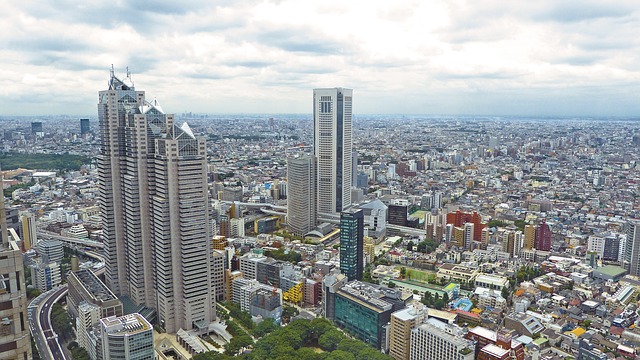
JapanEurope’s economy is decaying. Some economists are comparing this to the situation in Japan of two decades ago. In the most current news forecasts for development and inflation in 2015 were cut by the European Central Bank, with the possibility of considering quantitative easing to counter deflation.

But how does Europe feel about this comparison? Does it want to be the next Japan? There are a lot of attractive features in Japan such as: enhanced living standards, caring for the aging, low crime rate, and more.

Either way Europe would do well to look at Japan’s experiences and learn from them. Indeed, according to head of the Economic Policy Unit at the Centre for European Policy Studies, Cinzia Alcidi, Japan has already gone through what Europe is likely to encounter. People are concerned in Europe about its economic situation being “Japanized,” in other words, the economic bubble bursting. So the first thing Europe needs to focus on is cleaning its banks balance sheets. This is something Japan did at the time.

Still, on the other side of the coin, Japan is finding work for its youth (which Europe doesn’t seem to manage to do) possibly due to its better culture of work. Indeed, youth unemployment in Japan is even lower than it is in Germany. Young Europeans emigrate to find work, but the Japanese do not do this.

So while there are negatives in Europe becoming the new Japan, there are also positives – both culturally and ideologically.

Economic Growth: Japan and America

by Kelvin Boyes
by Kelvin Boyes

Japan could be slipping back into a recession. Thankfully, this is unlikely to have a negative effect on America’s economy but internationally, concern is expected to increase. The reason America is less likely to be impacted is two-fold: a mere 4.1 percent of American exports go to Japan and the falling value of the yen vis-à-vis the dollar which results in cheaper Japanese imports in America. Experts predict at most, a decline of around a tenth of a percentage point.

The regions that could be negatively affected however is Europe and China; areas that are already dealing with the challenges of slow economic growth.

Japan’s disappointing performance may be connected to the escalation in its sales tax. This was somewhat substantial – an increase of 5 to 8 percent. While it did help in reducing the overwhelmingly large budget deficit, it simultaneously had the negative impact of making consumer spending less appealing. Clearly, the economy just wasn’t up to this kind of move.

Shinzo Abe, Japan’s Prime Minister last year put money into the fiscal system, lowering interest rates through bond purchases last year. At that time, the region encountered a peak, following a stagnation of over two decades. But now, growth in the economy has weakened to around 1.5 percent.

Perhaps Abe needs to do a bit of what he did a year ago to get the region back on track.

US Enhanced Relationship with Indonesia

Joko-WidodoIt seems that America might be on the brink of enhancing its relationship with Indonesia. The fact that John Kerry turned up for the Indonesian President’s inauguration last month was nothing to sniff about.

It could have something to do with the US’s interest in Indonesia’s economy – the largest within Southeast Asia. As well, it may have been a support of what the election meant – that Muslim countries can thrive under democratic nations, having voted in Joko Widodo, as opposed to someone from the previous political elite and former generals. He defeated Prabowo Subianto by a staggering eight million votes.

In addition, the fact that the new President will be working hard to liberate women in Indonesia – in quite an unprecedented move – could well be helping American politicians and businessmen alike gain confidence in the nation as an attractive place in which to invest.

Enhancing Asian-Euro Relations

Olof-SkoogTomorrow, Milan will be hosting an Asia-Europe Meeting (ASEM) on “Responsible Partnership for Growth and Security.” According to Olof Skoog, European Union Ambassador to Indonesia, the discussions are set to be very useful since “they will help strengthen mutual understanding between European and Asian countries. The meeting’s partners also tend to increase. Croatia and Kazakhstan will likely join the event this year.”

The two regions are constantly working on enhancing relations. Indeed, just last month, a new position was created – that of European Union Ambassador to the Association of Southeast Asian Nations – stationed in Jakarta, to: “coordinate the EU’s expanding cooperation activities with ASEAN… represent the EU in all relevant negotiations, coordinate with EU Member States and enhance public diplomacy efforts in relation to EU support for ASEAN integration.”

However, there is still much work to be done. According to an EGS paper published in April of last year, “After two decades of cordial but shallow discussions and modest action on many topics, the EU and Japan have agreed to negotiate a deep economic partnership while trying to cooperate in many other issues under shared values and principles.” In addition, “ASEAN is still the most comprehensive and promising for Europe in terms of values, so the EU keeps supporting ASEAN’s development plans and has recently signed its Treaty of Amity and Cooperation. If ASEAN regains cohesion and strength, the EU may want to hold summits to advance beyond the current plan of action, and appoint special envoys and the like to consolidate South- East Asia as a model of cooperation in a broader Asia.”

Other issues keep arising too. One suggestion to tackle these, proposed by the EGS was: “European and Asian countries and regional organisations could globally excel in global multi-level linkages by creating unique synergies between info-communications and education technologies and services.”

There needs to be greater cooperation. Just last week ASEM parliamentarians “rejected the proposal to give he EU the status of a dialogue partner with the Association of Southeast Asian Nations (ASEAN).” But for sure, the ASEM, that has been in process now for a decade, is a great beginning that is gaining momentum each year.


Beylar Eyubov – From Brooklyn to The Azerbaijani Camp

saint-sulpiceBrooklyn-based musician Beylar Eyubov has been pushing for Azerbaijani’s rich culture to receive worldwide attention for many years. A native from the region, Eyubov made the move out West in the late 1990’s in order to introduce U.S. audiences to the stylings of Azerbaijani folk & jazz music. Over the last decade or so, his goal has been quite successful. People around the world have been learning about what his homeland has to offer, especially in the areas of art, music and history. Individuals such as Eyubov believe that it is a “great way to enhance peoples’ knowledge and appreciation of the oft-overlooked region and its culture.”

Discussing the recent Azerbaijani Camp, Eyubov expressed his excitement that France showed an interest in the culture of Azerbaijan. “Place Saint-Sulpice hosted the opening ceremony of the Azerbaijani Camp!” said Eyubov. “The Camp really offers a setting in which people from all over the world can gain a deeper appreciation for the country’s culture,” he added.

The Azerbaijani Camp was an event in which exhibitions were set up, teaching guests about Azerbaijan’s folk arts, music, history and more – a cause of supreme interest to Brooklyn musician, Beylar Eyubov.

Of course, there is so much more than culture at stake with such events. “I fundamentally believe – and have seen over the years – that when you bring people together, often from different backgrounds and opposite sides of the world, the path will be paved for the creation and maintenance of powerful bonds and multicultural friendships that can last a lifetime,” Beylar Eyubov said.

When asked about his day-to-day happenings, Beylar says he likes to keep his focus on bringing the lessons and notes of his native music to the boroughs of New York City and Brooklyn, where he teaches and performs regularly.

Current Economic Review: Japan and UK

a-UK-Japan-FlagRecent statistical analysis has indicated that Japan’s economy is weakening. July 2014 figures showed a drop in household expenditure while factory output and inflation remained status quo. However, some analysts said ‘real’ inflation actually dropped due to the actual figure when looking at the increase in sales tax a few months ago.

Moving over to the west, the UK is currently encountering a modest economic recovery. From May there was some improvement with the country’s GDP increasing 0.6 percent from June through August. As well, industrial output did better than expected in July. However, the UK is not doing great vis-à-vis its trade deficit. This issue can affect its global business and have an impact on Japanese investments.

What else may in the near future impact the UK’s economy is if the UK breaks away from Scotland. According to Mizuho Corporate Bank’s market economist, Vishnu Varathan:

“If you get any fluctuation in gilt yields, that will have a knock-on effect on yields across the global markets. Also many Asian investors have exposure to UK and Scottish-based financial institutions from asset managers to banks to insurers, while these institutions also hold Asian assets, so they may divest to cover positions too. If the fiscal burden for what remains of the UK goes a lot higher, that could push yields up as markets would expect more bond supply to come on to the market because of the higher debt obligations vis-à-vis the augmented GDP (gross domestic product) of the UK. Durable impact will be difficult to pin down until we get further clarity, but in the meantime the uncertainty will play out as sterling weakness and weaker markets in Asia as well, so we could see equities coming off and bond yields coming off.”

Both the Japanese and UK economies are recovering nicely and faring quite well (with a few issues here and there). But the economic forecast for the two is uncertain right now, especially with the potential of Scotland becoming independent from the UK. Only time will tell if that happens and, the impact on foreign investments it will have.

Asia America Relationships

asia-americaIt is possible that the various internal conflicts within the Asia region are adding to the attractiveness of America. Since there are tensions between Sothern and North Koreans, Bangladeshis have misgivings about Indians, etc. But when it comes to Asia America, trust issues seem to be better. Indeed, a recent survey conducted by Pew has proven this point statistically.

Pew’s Balance of Power Survey found that most respondents in eight Asian countries viewed America as their “chief ally.” Only Pakistan and Malaysia from Asia said they felt they were most comfortable with China in this realm.

The idea that a pro-US and a pro-China camp are both being built up in the region appears to have some traction based on Pew’s research. Two countries that named China as their chief ally also named the US as their main regional threat—as did China itself. Meanwhile, three states that said the US was their primary partner saw China as their nation’s main regional threat.

China on the other hand, does not view America as its closest ally, but rather Russia. This might be somewhat surprising, given the somewhat stressful history between the two nations. Returning to the topic of inter-Asian relations, again Pew found that there wasn’t all that much love lost. A mere 7 percent of Japanese respondents felt positive toward China with 8 percent of Chinese respondents feeling more or less the same about their Japanese counterparts.

Worst faring in the Pew survey was Pakistan, that no-one seemed to like particularly. Indeed, even though a large amount of Pakistanis (57 percent) named China their top ally, only 30 percent of the Chinese were positive about Pakistan.

How about America? How does America feel about Asia? Well, America does need its allies to balance China. But there again this is a two-way street since its allies need China to balance America. As a result of this, Asia-Pacific security has become heavily reliant on America with its economy dependent on China. Long-term this is not the best situation for America. So ultimately America should be deciding whether or not to continue its containment strategy, or work for advancement in Asia-Pacific’s region. So that’s where America is holding right now, vis-à-vis Asia.

Barrett Wissman Seeks to Bring Western Artists to the East

canton-international-festivalWhen Barrett Wissman became owner of IMG Artists in 2003, the takeover resulted in a “shake up of the arts world and especially classical music management.” Since then, IMG artists have been playing “in top venues round the world from Carnegie Hall to the Esplanade, whose programmers know that we can achieve very interesting things.”

So while over the last 11 years Barrett Wissman has engineered substantial success for IMG artists in the western world, he admits that it will “take several years to establish the IMG presence in Asia.” However, he believes that there has been some advancement in this area already, like the establishment in Kuala Lumpur of the new Malaysian Philharmonic Orchestra as well as the Chinese government hiring IMG to put on the Canton International Festival – a music festival in Guangzhou. This is expected to bring more than a thousand talented students in just for the inaugural event, due later this summer. And then there is the showing of Mamma Mia! by Singapore Press Holdings. IMG Artists is now starting to advise corporates directly, without the intervention of government agencies. For example, consultation with UBS in organizing the UBS Verbier Festival Orchestra that recently arrived in Singapore.

In addition, Wissman will be seeking out new talent – both in the west and the east. Within this regard, he already picked out Lang Lang, a piano prodigy who is to perform at this year’s Singapore Arts Festival. With Lang Lang and others like him, Wissman intends to try to guide these artists to ensure that “they don’t play too much or too little, and in the right venues.”


China UK: Trade Investment Deals

KeqiangTrade and investment deals were signed at the end of last month between large companies from China and the UK, totaling approximately £14 billion ($23.8 billion). At the same time, Premier Li Keqiang was in the midst of a three-day visit to the UK, seeking to enhance corporate links between the two nations, while participating in the annual UK-China Summit. Keqiang said:

“I believe there is extensive common interests between our two countries and our cooperation serves the interests of both and has global ramifications. And China is ready to work with the UK to foster a partnership for growth and inclusive development to ensure that this relationship will grow faster and in a healthier way.”

In recent years, there has been a substantial escalation in UK-China business – one example being jump to £12.4 billion last year from £7.6 billion in 2010 of UK goods being exported to China. The UK has been upping these exports as part of its program to counteract the Euro-Zone crisis’ impact. In addition, it is increasing exports to other fast-growing developing economies. China is just one of these.

UK Prime Minister Li Keqiang echoed this sentiment when he pointed out:

“The figures tell the story—bilateral trade at record levels, our exports to China up 15% in 2013, they have more than doubled in the last five years and at £1 billion a month, they are growing faster than France or Germany.”

Still, despite these economically-attractive figures, there is still work to be done on the political field. Just two years ago, Cameron irked Chinese officials when he met up with the Dalai Lama. It seems that things haven’t changed all that much in this regard over the last few years. Indeed, just before Keqiang arrived in the UK, he threatened to cancel his trip should he not be granted an audience with the Queen. In an article in The Times it was reported that the Queen had become “a pawn in a secret diplomatic showdown between London and Beijing.”

So while economically things are definitely moving in the right direction, the same cannot necessarily be said for the political situation.