Hong Kong Investors Take Big UK Share

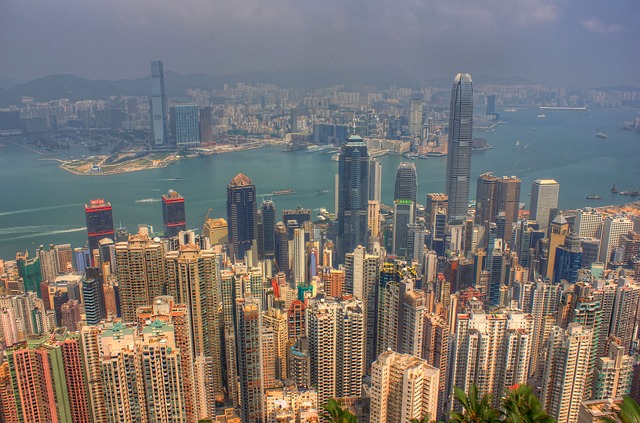
londonToday, if you take a walk down central London’s Oxford Street, don’t be surprised at how many stores there are owned by Hong Kong investors. Indeed, since 2013, the amount of these investors has almost doubled (at 188 percent) and today spans 9.7 percent of all stores. It is likely that this trend will continue given that there has been a deterioration in retail sales in Hong Kong.

However, Hong Kong investors might need to think twice. Given that rents in the UK – and indeed throughout Europe – are on an upscale, it’s not so easy to keep going there either. However, it is still an attractive option due to the reason rents are going up and that is because more tourists are coming to the area.

Also, given that China’s current economic situation is not that attractive and that rents on key streets in Hong Kong are increasing, there is no reason to see a drop in this trend anytime soon.

Building Better UK Malaysian Relations

malaysiaOne way to enhance the relationship between the UK and Malaysia, is according to Assistant Governor of the Central Bank of Malaysia, Bakarudin Ishak, is via “Islamic finance.” Two years ago, the Islamic Financial Services Act (IFSA) was put in place to “provide for a comprehensive regulation and supervision of Islamic financial sector in compliance with Shariah.”

At that time, when Hugo Swire, the UK’s then Foreign Minister visited Malaysia, it was suggested that there were three principal reasons the two regions have good relationships: a) close business ties, b) shared history and c) strength of the education links.

A few months later the then-PM of Malaysia, Prim Datuk Seri Najib Razak echoed this sentiment when he mentioned David Cameron’s “high regard for Malaysian achievements.” Ultimately it is hoped that by next year, bilateral trade will be increased to RM26 billion.

So today, the idea is that Islamic financing facilities will do that. One example is the Battersea Power Station Phase 3 Project in London, costing ‎£467 million. In addition, with the IFSA, Islamic banks can “develop a wider range of products to meet investor risk-return preferences where the return to the investor will be more directly linked with the performance of the deposit fund. The financing extend beyond debt-based to include equity-based financing. This effort will further promote economic growth by broadening the financial intermediary role of Islamic banks.”

IFCJ: Bringing Joy to Children

kidsWhen Jews from eastern Ukraine were displaced from their homes and forced to move away from loved ones and everything they knew, a free summer camp was organized. Pinchas Vishedski – with funding from the International Fellowship of Christians and Jews – wanted to make life a bit more normal for those children not enjoying their typical summer vacation.

The camp – called Tikva (meaning hope) – was free for the 100 refugees. Located in a forest by a river, it featured lectures (more than half of the participants are adults), sports activities, computer courses, and counseling for those who are clearly traumatized from what has happened to them.

The need for counseling at this point is great.  As Vishedski explained: “We’re talking about people who used to live in beautiful apartments, their homes had nice furniture, and now live in rented apartments that aren’t always the right size, so therefore such people deserve to have time to just take a break during the summer like everyone else.”

This is not the first time IFCJ has organized the funding of such programs to help those in need. For example, one of its projects last year was the distribution of grants totaling millions of dollars for “Operation Winter Warmth,” a program to keep those elderly warm who cannot afford heating. To date, IFCJ has raised close to $1 billion for its philanthropic efforts.

Ultimately as well as establishing better ties between different religions, IFCJ is helping many people around the world live a better quality of life, too.

China’s Downfall Impacting Global Economy

There are (justified) concerns that China’s somewhat slowing market is having a negative impact on the world at large. Economies internationally are reacting. In America, for example, the major indices have shut down and a similar trend is being felt in both Asia and Europe.

Here, Christine Lagarde, head of the IMF speaks.

[youtube https://www.youtube.com/watch?v=f82TCsB56Aw&w=560&h=315]

Eastern Economies looking toward Western Aid

economySigns have become apparent of a weakening of economies in England, America, Brazil and China. Conversely, economies in the Euro Zone are showing signs of strengthening. According to the OECD indicator though, the drop for the US was only slight, from 99.6 in April to 99.5 in July. In Europe however, it stayed stagnant for the third consecutive month at 100.7. There was a slight drop in the UK from 100.00 to 99.8. Japan’s index also remained stable.

Perhaps it is therefore not surprising that the red carpet was pulled out for the visit of China’s Premier, Li Keqiant who said that “China and Europe should expand mutual investment and even make joint investments.” What is helpful for this endeavor is the establishment of the AIIB.

Further, without pro-activity, the US economy could be headed for substantial downfall. The economy contracted by almost 1 percent according to the revised IMF outlook, and for the first time since 2006 there was a decline for two quarters in US productivity. Plus, the reality is, a staggering 37.1 percent of Americans are jobless.

America needs to act fast if its economic downfall is to turn around.

US Opportunities Arise in China

e-commerceThe Chinese e-commerce business Alibaba Group is trying to facilitate corporate activities for Americans. While the firm was established in China over a decade-and-a-half ago, it was done so with the intention of being used by global customers.

And today, China is a very different place to how it was at that time, especially with regards to class divides. Then it was much more working-class dominated for example; and today the paradigm has shifted to the middle class. Furthermore, now that the middle class has expanded so, it is equal in size to the entire American population!!! Added to that is the fact that it is anticipated that figure will double by 2022.

All of this means that the consumer market is increasing and will continue to do so with a huge escalation in disposable income. What US businesses now have to do is figure out how these people are spending their money.

And what the US businesses in this category should probably do is focus on the fact that there has been a tenfold growth of cross-border purchases from China’s online shoppers just in the last five years. It is that market that the US would be wise to tap into.

Canadian-Hong Kong Promo

hong-kongNorth America will be host to a promotion event for Hong Kong. ‘Think Asia, Think Hong Kong,’ will be held in Canada on June 8 and Chicago on June 10 is being organized by the Hong Kong Trade Development Council (HKTDC) in order to promote the region as an attractive environment for foreign investments.

It is anticipated that the two events will attract over 3,000 participants in total. At the event it is hoped that “a unique environment” will be created for Hong Kong businesses to promote their “service excellence to a targeted audience in North America,” according to Margaret Fong, Executive Director at HKTDC. As well, businessmen from the North American region will gain “a fresh perspective” on the benefits of bringing business to Hong Kong.

The event is being supported by over 80 supporting organizations in America and Canada as well as 16 Hong Kong partners.

However, in March trade balance in Hong Kong had an unexpected drop according to the Hong Kong Census and Statistics Department. But still, according to Edith Yeung, an investor who came from the world of entrepreneurship, businessmen and women in Hong Kong should look at China – as opposed to Europe or America – for market expansion.

UK-Asia Network

asiaUK’s Hull University has launched a new network to help launch research-based partnerships between East and Southeast Asia with Europe. The network – known as The East Asian Research Collaborations Network – was unveiled last month at a conference organized by the Society for Research into Higher Education.

At the conference, academics from around Asia and UK discussed issues of positive Asian economic growth in the UK. Indeed, as Professional of International Higher Education at the UCL Institute of Education, Simon Marginson noted:

“East Asia is on the margins in the UK, despite its overwhelming importance at the world level. We must push it into the centre of everyone’s consciousness…Building a broad highway between the UK and East and Southeast Asia is of great historical importance. In this, higher education must move out ahead of British society, government and business.”

This has to be good for UK-Asian business. As it is, historically, relations between the two regions have been good, and there is in existence EU bilateral and region-to-region agreements with several Asian and Pacific countries. As well, the UK participates in trade cooperation and contacts with the EU, for example via: ASEAN, the Asia-Europe meeting, the Asia Pacific Economic Co-operation (APEC).

Australian Partnership: East or West?

submarineAustralia has to decide whether it will go west (with France or Germany) or east (with Japan) vis-à-vis its choice of partner for the next generation of submarines. This project is set to be Australia’s “biggest ever defense procurement programme.”

While all three countries have quite the resume for this position, what will ultimately decide which direction Australia chooses will be the following issues: capability, cost, risk and schedule. In addition, the way that these countries’ systems and software applications collaborate with America – Australia’s alliance partner – will be an additional major consideration.

It could well be that ultimately Australia will decide to go the eastern route. Just last month during its talks with Japan, the military discussed potential design and production issues of the submarines, possibly narrowing down its choice. But nothing is yet set in stone. Proposals are still being welcome from all three countries. And, no matter which country is chosen, much work will still take place in Australia.

One reason China and Russia are not being considered (despite the fact that they are experts in this field) is because Australia does not generally work with these countries in military matters.

Ultimately, price will probably be one of the key determining factors as to which route Australia will ultimately take on this project.