In an effort to advance relations between China and the UK, initiatives are being taken to bring Chinese Mathematical teaching methods to England. In this video from CGTN Africa, we learn about the consolidation between Century Publishing (China) and Harper Collins (UK) which is seeking to persuade schools in the UK to change their teaching methods to those used in Shanghai. This would mean British students would use Chinese arithmetic textbooks.
Author: eastwestmarkets
The Kazakhstan-Lianyungang–Vietnam Transport Corridor
The new agreement between Vietnam and the EAEU countries (Eurasian regions) is set to encourage import-exports between the countries. As an integral part of the new economic policy (Nurly Zhol), Nursultan Nazarbayev (President of Kazakh) determined that effective transport and logistics chains need to be built between Europe and Asia through Kazakhstan.
As well as supplying cargo to Vietnam, finding out how successful delivering goods from China to Southeast Asia, will be helpful. As such Kazakhstan – as well as exporting its own materials – needs to offer goods from EAEC countries to Southeast Asian regions via the Kazakhstan-Lianyungang (PRC) – Vietnam Transport Corridor.
The first consignment had 32 containers filled with 700 MT of Kazakh grain. It left at the end of January.
This sentiment was echoed last month at a meeting addressed by Beketzhan Zhumakhanov (Kazakh Ambassador) spoke. He said:
“Today, we have the first meeting in Vietnam and representatives of Kazakhstan, Vietnam and China gathered at a negotiating table to discuss the prospects of transporting goods along the Kazakhstan-Lianyungang Port-Vietnam corridor and further to other countries of Southeast Asia.”
And now they are looking toward additional methods of increasing trade (within the agreement), while testing options via the Kazakhstan-Lianyungang Port-Port of Ho Chi Minh City route. Zhumakhanov explained:
“A railway route from Kazakhstan to the port of Lianyungang was constructed where we established a joint venture. China is interested in the exploitation of railways for the delivery of goods to Russia and the European countries. China sent its first freight train to London through Kazakhstan in early January. It took 18 days, which is two times less than by the sea route and much cheaper than air transportation.”
To date, around 40 countries are interested in establishing trade and economic relations with the EAEU and right now, the EAEU is working on FTZ agreements with: China, Iran, India, Israel, and Singapore.
UK: Looking Ahead
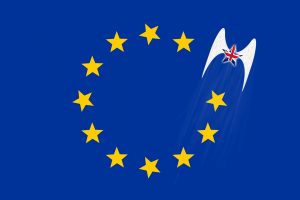 Rather than just following the trend of what looks good now, it seems that officials in the UK are considering what might make good trading sense for the future. As such it is turning to some of the poorest regions in the world in an effort to secure trading partners for long-term deals.
One example of this was the recent support the country’s Department for International Development is planning to give to economies in Asia and Sub-Saharan Africa. Working with the governments there, the plan is to help the advance local businesses there, while escalate job opportunities and develop infrastructure.
For Britain, this will create new trading relationships outside of the European Union, following BREXIT. As such, Britain’s Prime Minister, Theresa May has been traveling to different places around the world in an effort to attract more trade, with an emphasis being put on establishing new connections with emerging economies. This is being pushed by the UK’s ‘Economic Development Strategy,’ which seeks to take existing commitments and build on them, while confronting any international issues like population growth, climate change, etc.
In addition, given that outsourcing manufacturing to firms in Asia is pretty much the only option available to small businesses in the UK, developing these relationships now will bode well for the future. Plus, looking at the banking industry, increased labor costs along with minimal profitability has rendered many staff members to leave existing positions for Southeast Asian locales. With HSBC this year having moved its offshore jobs to Asia, this trend is likely to continue.
Should the UK Look to Asia Post-Brexit?
 Post-Brexit, where to now for the UK? This question has been on the minds of various economic commentators and executives and some feel the answer strongly lies in south Asia. Given that the UK’s political perception is somewhat dicey, south Asia’s patience could just be the perfect fit. Continental Europe is not exactly famous for its capacity at coping with any kind of political turmoil.
Furthermore, when you look at Asia, most business is conducted there in English. British executives do not traditionally pride themselves on their proficiency in foreign languages and in other parts of Europe that is often met with substantial disdain. Given the fact that in addition to that, 9 percent of foreign-born Brits hail from India, 6 percent from Pakistan and 2 percent from Bangladesh, this Asian origin could – as noted in a recent Financial Times article written by Daiva Repeckaite – result in a “cultural and economic bridge” following Brexit.
There is still a chance though that Europe could be the place of choice for British executives to invest. Or at least, borderline. Given that British PM Theresa May just signed a $US125 million ($165.6 million) defense equipment deal with Turkey, this is likely to result in greater trade between the two regions. Now Turkey is interesting because it was just under three years ago that the country started its process of going into the Europe Union (not that long before Britain started its very own exit) and anyway geographically it is a bit of a fence-sitter between Europe and Asia, resulting in a somewhat confused identity.
Still, with May’s recent deal the UK is hopeful that this will lead to additional trade between the allies, pushing for an aviation security program simultaneously. May actually referred to the deal as indicative of Britain being a “great, global, trading nation and that we are open for business,” so really this open-ended statement could lead the UK in any direction, east or west.
Asia and the Expansion of UK’s Insurance Markets
 Part of the UK’s insurance markets could be expanding into different regions of Asia. Having identified 8 countries in this eastern region the Association of British Insurers (ABI) will be making its mark overseas. In particular, China and India were singled out as attractive areas for the Association. Other areas included: Hong Kong (SAR), Indonesia, Japan, Malaysia, Singapore and South Korea.
ABI chose these countries having assessed them for growth potential, market size and current commercial/regulatory relationships. According to the firm’s Director General, Huw Evans, there is an opportunity for the entire insurance and long-term savings industry to take a key role in new post-Brexit international trade deals. This should be done gradually so that secure improvements are more likely. Ultimately free trade could benefit everyone and this industry, Evans believes, is in a prime position to demonstrate that fact.
Another industry that seems to be thriving in the Asia-Pacific region is prefabricated housing; with two-thirds of it now being in the area. This is particularly true for China where – it is estimated that between 2014 and 2019 – two-fifths of new international demand will be generated.
Asia and Europe: Working Together
 Brussels is close to signing a deal with Japan. This sentiment is quite antithetical to what went down with the EU-Canada trade pact (CETA) that was nearly brought to its knees last month. Now, things are quite different…which is quite surprising. As Alan Beattie, noted, Japan and Europe are having a much easier time making deals. He said that: “it seems remarkable that a country like Japan with an economy three times the size of Canada’s might be about to sign a trade deal with the EU with about a tenth of the hassle.” But it is unlikely that this will be the case with this deal. EU trade commissioner Cecilia Malmström stressed their commitment toward finalization of the deal.
The agreement is quite similar to the CETA one although somewhat dissimilar just due to the logistics: Canada’s economy is a third in size of Japan’s. The subjects still under discussion include: Japan’s auto industry regulations, amount of European agriculture exports allowed to Japan and the establishment of an investment court so that state/corporation disputes may be solved.
Currently the Japanese are stalling on the court; they are not convinced it is needed. The problem was inadequate provisions to ease legal action between such bodies when decisions made by nations hamper companies profits.
Meanwhile, vis-à-vis safety, a new network has been established by the International Atomic Energy Agency (IAEA) to bolster Europe and Central Asia’s nuclear and radiation safety. They are doing this by pushing dialogue and the exchange of knowledge between these regions’ member states. When the EuCAS Network (European and Central Asian Safety Network) was first formed, it was to unite 20 member states and 22 organizations and help them take equal responsibility for nuclear safety.
Asia Versus US: Economic Challenges
 Asia is potentially posing economic challenges for America. Jobs in the US are going to people in Asia more than ever. Back in the 1940s this was just relegated to the textile and clothing industries but now it has expanded into electronics, steel and shipbuilding, which is concerning for the US, especially since various regions in Asia are simultaneously encountering substantial economic expansion.
But there is more to the picture than this. Asia is also actually creating a lot of jobs for Americans in the fields on tourism, trade, FDI, immigration and education (Asian students who study at American universities). Furthermore, over 710,000 jobs in the America are supported by exports to Japan. True, the Japan-American affiliation is one of the world’s closest, wide-ranging and constructive bilateral ones to exist. Both are huge global powers (US being the first, Japan being the third) with high per capital wealth, quality of life and military spending. Indeed, according to the Japan Matters for America project set up by the East-West Center and Sasakawa USA, there have been substantially positive economic and employment gains from this partnership.
Looking at some relatively recent figures we find that in 2012, American exported $408 billion in good to Japan. A year earlier, services accounted for $156 billion (which was higher than the EU, Canada and Mexico). Indeed, Asia is actually the largest place US exports are sent, with particularly high numbers since the fiscal downturn of 2009.
It is also noteworthy that it is only Japan which is a major trading partner with America (in 2014 ranking number four for good exports). In the same year that was true for America in Japan. The exports in 2013 were said to have supported 17,000 Pennsylvanian jobs, while bolstering productivity most notably in manufacturing, transportation and retail. Furthermore, the Asia-Pacific region FDI results in the creation of jobs in America. The estimation of Japanese FDI in America was that it accounts for over 700,000 jobs.
America is therefore, definitely benefiting from Japan, in education (Japanese students studying in the US contribute $600 million to their economy) and with over 9.4 million Japanese visitors to the US, in 2014 that added $17 billion to the US economy.
Japan and America are clearly good for each other. Americans need to stop worrying about the power of their Asian friends and instead, start embracing it.
US-Japan Study Promotion
 The 26th annual Japan-American Grassroots Summit is currently in process. Held between October 4th and 11th it is being hosted in part by the University of North Georgia in order to promote the institution’s new academic degree in Japanese studies. There are 130 Japanese visitors at the summit this year. Around 30 Japanese guests will be hosted by the UNG. These individuals will be able to participate in cultural events taking place in Atlanta. Following that, they will go to their host families around the globe (Athens, Dahlonega and Gainesville).
Meanwhile, over in Minnesota, the Japan American Society of Minnesota’s Professional Group is likewise promoting cohesion between the two regions. Its career event that was held at the end of August was set up in order to “connect Japan-related business professionals from various fields to both college students and recent graduates who are pursuing Japan-focused careers.” At the end of this month, on October 26th, the JASM will be hosting a Corporate Roundtable with JETRO Chicago’s Chief Executive Director, Ichiro Sone “to promote mutual trade and investment between Japan the rest of the world.”
AT the UNG event, Dr. Edward Mienie, UNG’s associate vice president for economic development and community engagement, and chair of UNG’s Regional Education and Economic Development Committee (REED) said: “This year’s summit will highlight Georgia culture and customs, local attractions, and the unique business relations between Japan and the Peach State for more than two decades, which profited $16.38 billion in 2015.”
America’s Eastern Exports
The USA is one of the world’s largest exporters. Included in this is Asia, specifically Japan with a staggering $134 billion in exports, primarily with cars. South Korea wasn’t far behind with exports totaling $74 billion. Likewise, India’s figure was $46 billion; that region is actually one of the fastest growing exports (mainly in the fields of gemstones, oil and pharmaceuticals).
Getting Financially Savvy this Summer
 Summertime can be financially draining. The kids are going to camps, families take vacations, there are days out, etc., etc. This article takes a look at a couple of apps which can help facilitate these scorching summer months.
First up is P2K Money which is a perfect way of educating kids about finances. Summertime is optimum for this since there is no schooling anyway and it can be fun. For kids who love technology and gadgets, the monetary lesson gleaned from this app lets them track their earnings (if they have an allowance, a summer job, babysitting, lemonade stand, dog walking, etc.), watch their savings increase and even make a “wish list,” featuring pictures of all the things they want to purchase.
The great thing about the P2K Money app is that it gets kids into good financial habits by showing them how rewarding it is to make money when they work hard and how not buying everything they see straight away can result in larger savings which will enable them to buy bigger items down the line.
One for the adults this summer is the Price Grabber which is really good for keeping costs down. While not a new app, when you find an item you like (kids could benefit from this too actually), you can scan the barcode and check prices elsewhere. Also, being aware of how much something is can encourage you to stick to a budget, especially in the summer when spending is more likely to get out of control.